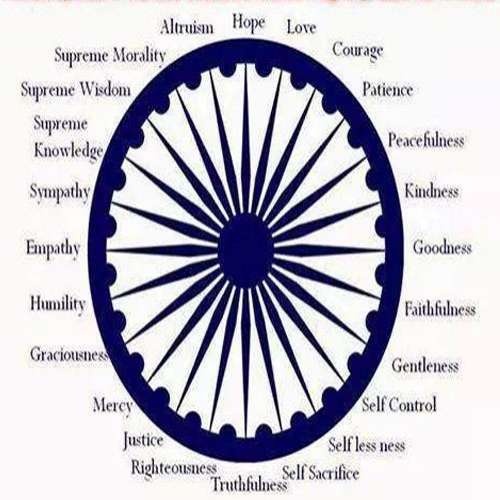
What Is The Symbol In The Center Of The Indian Flag
What Is The Symbol In The Center Of The Indian Flag. As we know that our indian flag has three colors saffron, white and green and there is also a wheel at the center of the white part. This is the dharma chakra (or wheel of law) , the wheel of law in the sarnath lion capital. The ashoka chakra has 24 spokes which inspire every indian to. The red circle in the middle of the flag represents the sun. White also stands for cleanliness and knowledge. There are three colors in india flag. The chakra represents the continuing progress of the nation and the importance of justice in life. The saffron color is also called the bhagwa color, this is a symbol of hindusm.the white color symbolism for peace, unity and truth. The emblem at the center symbolizes the yin (blue) and yang (red) cosmic forces that are necessary to maintain a harmonious balance. The top stripe is a deep saffron colour, the middle is white, and the bottom is green. This traditional flag features a red cross over a yellow background with the white shield presenting the red hand of ulster in the center. The white in the middle band of the flag symbolizes the path of truth, honesty and peace that india will take. The flag was first adopted during a constituent assembly meeting on july 22, 1… The wheel has 24 spokes. We are providing here a comprehensive list of major hindu symbols and their meanings.
Why does the 'Ashoka Chakra' in the Indian flag have 24 spokes? Quora from www.quora.com
At the center of the white band there is a wheel (chakra) which is navy blue in color. The circular symbol in the center of the flag, the ashoka chakra, is the wheel of the dharma, the cosmic law that upholds the order of the universe. This traditional flag features a red cross over a yellow background with the white shield presenting the red hand of ulster in the center. In the middle is white, which stands for truth in word and actions and purity in our thoughts. It is round hollow wheel and has 24 spokes radiating from the center. As we know that our indian flag has three colors saffron, white and green and there is also a wheel at the center of the white part. The ratio of the width to the length of the flag is 2:3. The indian national congress, india's largest political party before independence, adopted a white, green and red flag as its unofficial flag in 1921. At the crux of their faiths, buddhism, hinduism, jainism and sikhism all subscribe to the concept of the dharma. The flag of india is composed of three horizontal stripes.
The Upper Semicircular Portion Of The Logo Represents Eagle Feathers.
Truth or satya, dharma or virtue ought to be the controlling principles of those who. So let’s build the indian flag. The flag was first adopted during a constituent assembly meeting on july 22, 1… The deep saffron colors shows courage and sacrifice. The dharma chakra which, according to the hindu faith, symbolizes that life thrives with the movement or progression of a community but stagnation of movement or progress brings death to the community. The dharma chakra in navy blue in the middle signifies the “wheel of law” made by the 3 rd century bc mauryan emperor ashoka. The wheel has 24 spokes. The ratio of the width to the length of the flag is 2:3. We are providing here a comprehensive list of major hindu symbols and their meanings.
At The Top Is Saffron, Which Signifies Sacrifice And Patriotism.
When india's national flag was adopted in the constituent assembly, the then vice president dr. The indian national congress, india's largest political party before independence, adopted a white, green and red flag as its unofficial flag in 1921. The four black trigrams, or kwae, on each corner of the flag. All the color is equal horizontal bars. This is the dharma chakra (or wheel of law) , the wheel of law in the sarnath lion capital. In the middle of the white is a blue wheel, which is called the ashoka chakra. Radhakrishnan explained the meaning of the spoked wheel that featured in the centre of the flag as follows: The chakra represents the continuing progress of the nation and the importance of justice in life. In the middle is white, which stands for truth in word and actions and purity in our thoughts.
The Emblem At The Center Symbolizes The Yin (Blue) And Yang (Red) Cosmic Forces That Are Necessary To Maintain A Harmonious Balance.
Below you can find them all with their unicode values. The circular symbol in the center of the flag, the ashoka chakra, is the wheel of the dharma, the cosmic law that upholds the order of the universe. The top stripe is a deep saffron colour, the middle is white, and the bottom is green. The ashoka chakra has 24 spokes which inspire every indian to. In the center of indian flag ashokchkra it suggests the progress of india. In the center of the white band is a blue wheel with 24 spokes. So first create a wrapper div (class named wrapper) that holds two divs class named stick and flag. Vexillology is the study of flags. The zia sun symbol is prominently displayed on the new mexico state flag.
The Flag Of India Is Composed Of Three Horizontal Stripes.
The saffron color is also called the bhagwa color, this is a symbol of hindusm.the white color symbolism for peace, unity and truth. The national flag of india is a horizontal tricolor having a deep saffron (kesari) band at the top, a white band in the middle and a dark green band at the bottom. Stella teller of isleta pueblo designed the logo for the indian pueblo cultural center in 1978. The indian national flag is also called the tricolor or tiranga. It is a horizontal tricolour in equal proportion of deep saffron at the top, white in the middle and green at the bottom. The national flag of india features a navy blue wheel (ashoka chakra) placed at the center of a tiraṅgā (rectangular tricolour), with the colours saffron, white and green. There are three colors in india flag. At the crux of their faiths, buddhism, hinduism, jainism and sikhism all subscribe to the concept of the dharma. The sanskrit word for the symbol is pratik, which is derived from the root prati (going towards).